We provide bulk importation from Nigeria to the UK, for commercial and domestic use.Bulk imports from Nigeria to the UK.See what we importCall +234 701 922 1269
What you can send, what you cannot, and how to pack it
Who we are
Savoy Snowball Service Ltd
A freight forwarder based in Ikorodu, Lagos.
What we do
Cargo from Nigeria to the UK
Air, sea, parcels and door-to-door. One direction only.
Why us
About half what a courier charges
Consolidated cargo, priced before it ships.
Where we serve
All of Nigeria → UK
Free drop-off in Ikorodu. We collect across Lagos.
Food cargo from Nigeria to UK is what this route carries. It is also where shipments go wrong, because UK
import rules are stricter than most senders expect and almost nobody sets them out
properly. So here is the list, item by item.
Can I send this?
Start typing an item — garri, suya, crayfish, yam. Verdicts come from GOV.UK
guidance checked on 14 September 2026.
BannedSuya, kilishi, any dried or cooked meatMeat and meat products are banned from outside the EU with no allowance at all.
BannedPonmo (cow skin)A meat product. Banned, with no allowance.
BannedMeat pies, sausage rolls, anything meat-filledBanned as a meat product, including filled pastries and sandwiches.
BannedMilk, yoghurt, cheese and other dairyMilk and milk-based products are banned. The only exception is infant or medical formula, up to 2kg.
Certificate neededFresh yamA fresh vegetable from outside the EU, so it needs a phytosanitary certificate from the Nigerian plant health authority.
Certificate neededFresh pepper, okra, fresh ugu and other fresh vegetablesSame rule — most fresh produce needs a plant health certificate. Dried and packaged versions do not.
Ask us firstEgusi and ogbono — whole raw seedsRaw seeds are not the same as a processed product, and seeds from outside the EU can need a plant health certificate. Ask us before you pack whole seeds, and send them ground where you can.
Within a limitDried fish, stockfish, smoked fishCounts toward the 20kg per-person fish allowance. Processed fish that is dried, cured or smoked is explicitly covered.
Within a limitCrayfish, prawnsAlso inside the 20kg per-person fish allowance.
Within a limitSnails (igbin, congo meat)Up to 2kg per person, and they must be preserved or shelled.
Within a limitHoneyUp to 2kg per person.
AllowedGarriProcessed and packaged plant product. Keep it sealed and labelled, not loose.
AllowedPalm oilProcessed plant product. Double-seal it — leaks are the practical risk, not the legal one.
AllowedPlantain chipsProcessed and packaged plant product.
AllowedFresh plantain and bananaNamed by GOV.UK as exempt from the plant health certificate requirement.
AllowedRice and other grainsGOV.UK names "certain grains, such as rice" as allowed.
AllowedGroundnuts, kuli kuliPeeled and processed nuts and nut butters are allowed.
AllowedSeasoning cubes, packaged soups and spice mixesPackaged soup, stocks and flavourings are allowed from any country.
AllowedDried pepper, dried vegetables, dried bitter leaf and uguAllowed once dried and packaged — they count as processed plant products.
AllowedChin chin, biscuits, cakes without fresh creamAllowed. Not cakes with fresh cream, and nothing filled with meat.
AllowedEgusi and ogbono — ground and packagedOnce ground and sealed in packaging these are processed and packaged plant products.
Nothing matches that. It does not mean the item is banned — it means we have not
listed it yet. Ask us and we will check, then add it here.
Being allowed through customs and arriving in good condition are two different
problems. These are the ones we see most:
Dry things properly before they are packed. Anything still holding moisture will develop mould over a week in transit. This is the single biggest cause of food arriving spoiled.
Double-bag and seal dried fish and crayfish. The smell travels, and it will get into clothing packed in the same box.
Treat palm oil as a leak waiting to happen. Seal the lid, bag the bottle, then bag it again. A leak can ruin everything around it.
Keep food away from clothing wherever you can. If an inspection opens one bag, you want the damage contained.
Label what is in each bag. An inspection that can identify contents quickly is an inspection that repacks rather than confiscates.
Send ground rather than whole where you have the choice. Ground and packaged egusi or ogbono is clearly a processed product; a sack of raw seeds is a harder conversation at the border.
Food cargo from Nigeria to UK price: how it is worked out
Food is priced exactly like any other cargo: ₦8,000 per kilogram by air, or
£1.50 per kilogram by sea. There is no food surcharge.
Most people describe a food shipment in items rather than kilograms — two bags of
garri, a carton of dried fish. That is fine. Send us the list and we will work out
the weight.
Your shipment travels with other people's. That consolidation is what makes it
roughly half the price of a courier, and it also means one banned item can hold up a
consignment that dozens of families are waiting on.
So we ask, and occasionally we say no. It is not bureaucracy. It is the thing
standing between your relative's food and a Border Force incinerator.
Common questions
Can I send Nigerian food to the UK?
Most of it, yes. Garri, palm oil, packaged egusi and ogbono, dried pepper, groundnuts, seasoning cubes and plantain are all allowed. Dried fish and crayfish are allowed up to 20kg per person. Meat and dairy are banned outright. Rules checked 14 September 2026.
How much does it cost to send food from Nigeria to the UK?
Food is priced the same way as any other cargo: ₦8,000 per kilogram by air, or £1.50 per kilogram by sea. See our prices page for the full table.
How should I pack dried fish so it arrives well?
Dry it thoroughly first, then double-bag it and seal it. The problem in transit is almost never the fish itself — it is moisture and smell reaching everything packed around it. Keep it away from clothing.
Will my food be opened and inspected?
It can be. Border Force inspects cargo, and Nigerian authorities inspect outbound shipments. Packing food so it can be identified and resealed makes an inspection quicker and less destructive.
What happens if one person in a consolidated shipment sends something banned?
It is dealt with at the border, and in the worst case it delays the whole consignment while it is resolved. That is why we ask what is in your boxes, and why we would rather turn an item away than let it travel.
Verdicts on this page come from GOV.UK guidance checked on 14 September 2026. We are
a cargo company, not a customs authority — this is a plain-English summary, not
legal advice.
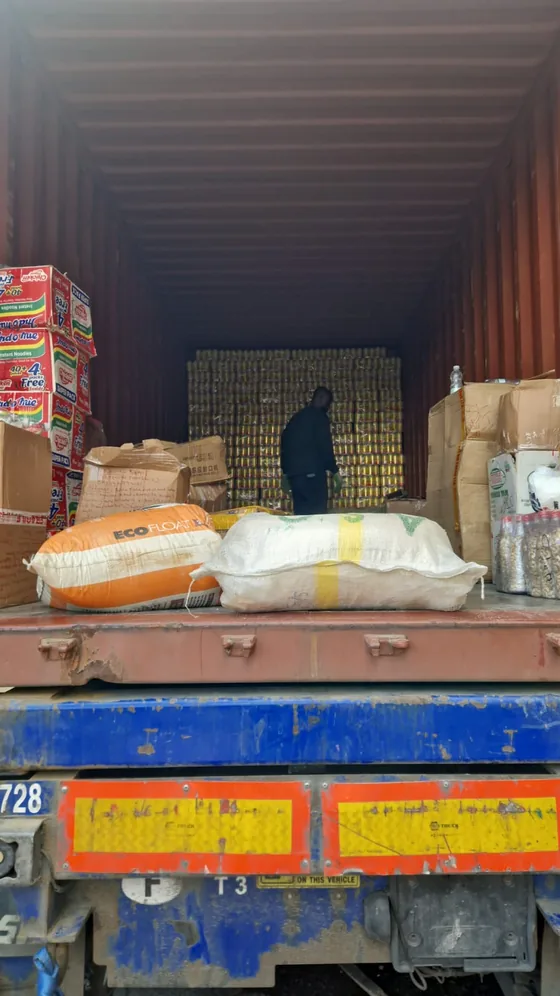
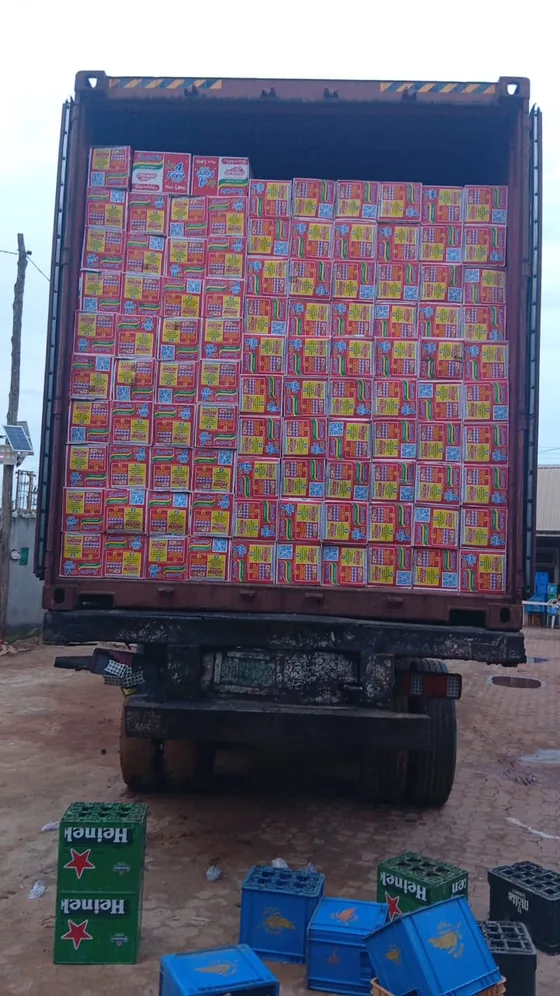
Our own photographs of a container being filled in Nigeria — Indomie, pounded yam, nuts and sacks. Everything here is packed dry and shelf-stable, which is what survives the journey and clears UK customs.
Indomie, pounded yam, nuts and sacks going in by hand.Packed to the door with cartons of Indomie — floor to ceiling, wall to wall.
Ready to send? Get a price today.
Tell us what you are sending. We confirm the price before anything ships.